Electronics Engineering · CHAPTER 01 · FOCUSED LESSON

The Electron & Edison Effect

How electron discovery and a bluish lamp glow opened the door to electronics.

Late 19th centuryALI'S NOTES · PAGE 11

Electronics began when charge could cross a vacuum.

The identification of the electron and the Edison effect shifted attention from simple conduction in wires to the controlled emission, motion and collection of charge.

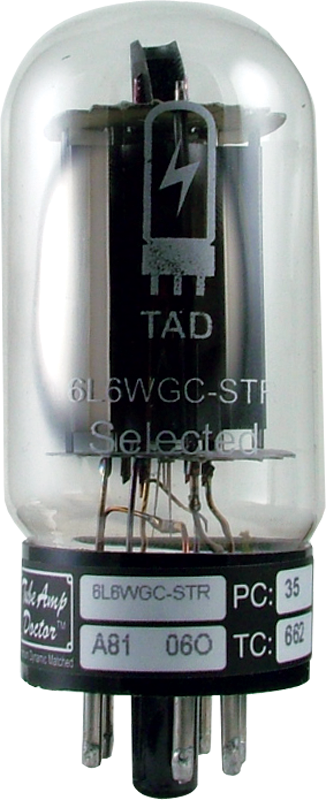
Historical vacuum tube
A vacuum tube creates an engineered path for electrons through evacuated space.Selected from Ali Chourba's original course document.
01
THE PARTICLE

Thomson identifies the electron; Millikan measures its charge.

Late-nineteenth-century experiments showed that cathode rays were streams of particles much smaller than atoms. Sir J. J. Thomson identified the electron and measured its charge-to-mass ratio. Robert Millikan's oil-drop work later determined the elementary charge with high precision, making the particle description quantitative.

Electronics could now be defined around the emission, behaviour and control of electrons rather than only around bulk electrical conduction.
02
EDISON'S OBSERVATION

A hot filament sends charge across empty space.

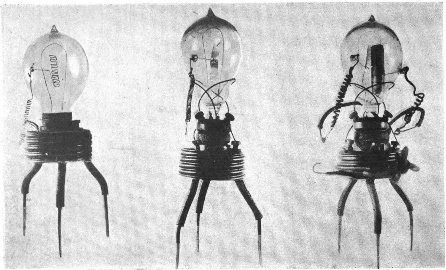
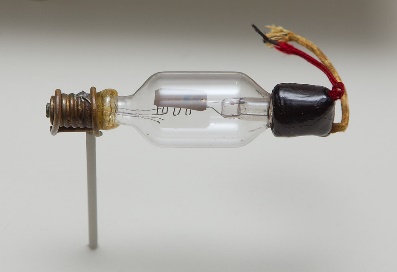
Thomas Edison observed a bluish glow in some early lamps and found that current could flow from a hot filament toward a second electrode when that electrode was positive relative to the filament. The evacuated bulb contained no ordinary metallic bridge between them.

Heating supplied electrons at the emitter with enough energy to escape the material's surface—a process later called thermionic emission. A positive plate collected the emitted electrons; a negative plate repelled them. The effect was directional and therefore already contained the principle of a valve.

03
FROM EFFECT TO DEVICE

Controlled emission separates electronics from electricity alone.

Fleming converted the effect into a two-electrode rectifier for radio detection. Coolidge improved electron tubes for X-ray production. De Forest added a control grid and made amplification practical. The common idea was the same: emit electrons, shape their path with electric fields and collect them at an electrode.

THE IDEA TO REMEMBER

Electronics emerged when engineers learned to control electrons between electrodes, including through a vacuum.

01

IDENTIFICATION

J. J. Thomson: electron
02

MEASUREMENT

R. A. Millikan: elementary charge
03

MECHANISM

Thermionic emission

COURSE SOURCE · “ELECTRONICS AND TECHNOLOGY” · ALI CHOURBA