Electronics Engineering · CHAPTER 01 · FOCUSED LESSON

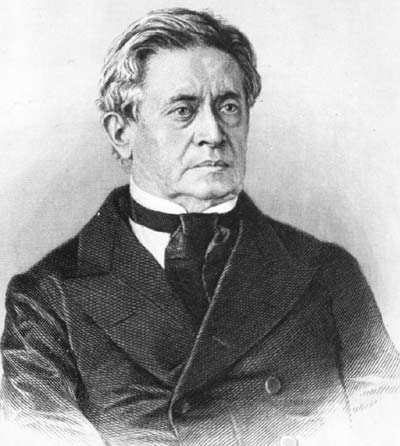
Joseph Henry

Insulated coils, powerful electromagnets, early motors and transformer action.

1820s–1830s · United StatesALI'S NOTES · PAGES 12–13

Joseph Henry turned insulated wire into powerful machines.

Silk insulation allowed many close turns around an iron core without short-circuiting them, strengthening electromagnets and enabling induction, motion and long-distance signalling.

Portrait of Joseph Henry
Joseph Henry (1797–1878)Selected from Ali Chourba's original course document.
01
INSULATED WINDINGS

More turns without electrical shortcuts.

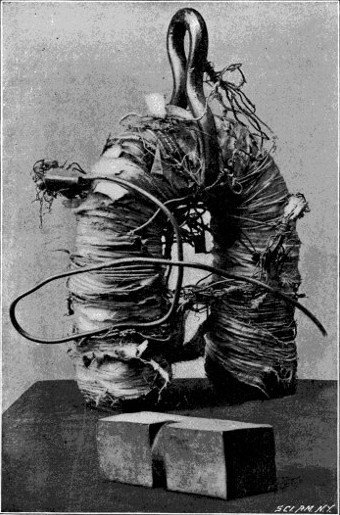
Henry built electromagnets of several sizes from 1820 onward. In 1827 he recognized the importance of insulating copper wire—often by wrapping it in silk—before winding it around an iron core. Adjacent turns could then touch physically without becoming one short electrical path.

A larger number of effective turns increased magnetizing action. The basic construction remains recognizable in modern solenoids, relays, contactors and transformer windings.
02
MUTUAL INDUCTION

A changing current in one coil acts on a second coil.

Henry's work used electricity to create a strong electromagnet whose changing field could induce current in a nearby circuit. Faraday approached induction with relative motion between magnet and conductor; together the experiments established the transformer principle: a changing magnetic flux links separate windings.

The key word is changing. A steady DC current produces a steady field after switching and cannot continuously induce voltage in the second coil.

03
FROM LAB TO INDUSTRY

Ore separation, motors, bells and telegraphy.

In 1831 Henry and Allen Penfield produced an ore separator. An electromagnet magnetized iron spikes on a rotating drum; the spikes collected the purer iron from powdered ore. The magnet could lift about 750 pounds (340 kilograms), making the apparatus one of the earliest commercial electrical products.

Thomas Davenport saw the machine and later developed an early powerful electric motor. Henry also built oscillating-beam motors, sent an electrical signal over a mile of wire to strike a bell at Albany Academy, and developed an “intensity battery” in 1836 that helped make Morse's telegraph practical.

THE IDEA TO REMEMBER

Insulation enabled more turns; more turns created stronger fields; controlled fields enabled induction, motion and signalling.

01

1827

Silk-insulated copper windings
02

1831

Commercial ore separator
03

1836

Intensity battery for telegraphy

COURSE SOURCE · “ELECTRONICS AND TECHNOLOGY” · ALI CHOURBA