Electronics Engineering · CHAPTER 00 · FOCUSED LESSON

André-Marie Ampère

Forces between current-carrying wires and the invention of the solenoid.

1820s · FranceALI'S NOTES · PAGE 7

Ampère showed that currents exert forces on currents.

After Ørsted connected current to magnetic deflection, André-Marie Ampère compared current-carrying conductors and developed mathematical laws for their interaction.

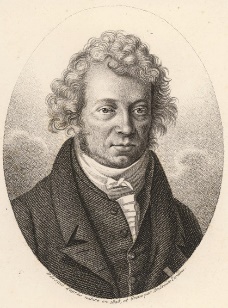
Portrait of André-Marie Ampère
André-Marie Ampère (1775–1836)Selected from Ali Chourba's original course document.
01
PARALLEL CURRENTS

Direction determines attraction or repulsion.

Place two long parallel wires near one another. Each wire creates a magnetic field that acts on the current in the other wire. When conventional currents run in the same direction, the wires attract. When the currents run in opposite directions, the wires repel.

This direction rule is sometimes stated incorrectly. The correct physical result is same direction → attraction and opposite direction → repulsion.
02
FROM TEST TO LAW

Ampère generalized the result mathematically.

Ampère related the mutual action of current-carrying wire elements to current intensity and geometry. The modern circuital law connects the circulation of magnetic field around a closed path to the current enclosed by that path, with Maxwell later extending it to include changing electric fields.

03
THE SOLENOID

Many loops reinforce one another.

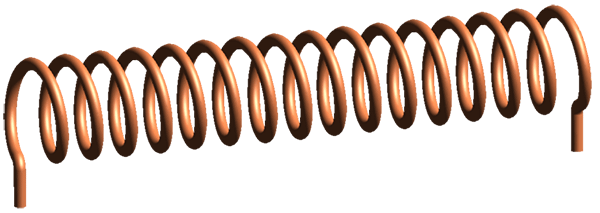
Ampère also developed the solenoid: wire wound into a long coil. Fields from neighbouring turns combine, producing a relatively strong and nearly uniform field inside a long coil. Add an iron core and the device becomes a practical electromagnet—the principle used in relays, valves, actuators and contactors.

THE IDEA TO REMEMBER

Magnetic force is created by moving charge, and geometry lets many small field contributions combine into a useful device.

01

SAME DIRECTION

The wires attract
02

OPPOSITE DIRECTIONS

The wires repel
03

COIL

A solenoid reinforces the internal field

COURSE SOURCE · “ELECTRONICS AND TECHNOLOGY” · ALI CHOURBA