Electronics Engineering · CHAPTER 00 · FOCUSED LESSON

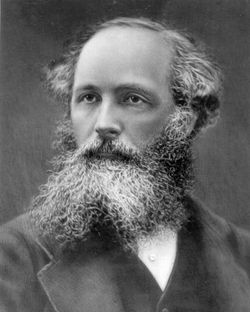
James Clerk Maxwell

One unified theory for electricity, magnetism, light and electromagnetic waves.

1860s · BritainALI'S NOTES · PAGES 8–9

Maxwell unified electricity, magnetism and light.

James Clerk Maxwell did more than collect earlier laws. He introduced the missing symmetry that allowed changing electric and magnetic fields to sustain an electromagnetic wave.

Portrait of James Clerk Maxwell
James Clerk Maxwell (1831–1879)Selected from Ali Chourba's original course document.
01
THE UNIFICATION

Separate observations become one field theory.

Maxwell assembled results associated with Coulomb, Gauss, Ørsted, Ampère and Faraday into a coherent mathematical framework. Electric and magnetic forces were no longer unrelated subjects; they became different manifestations of one electromagnetic interaction.

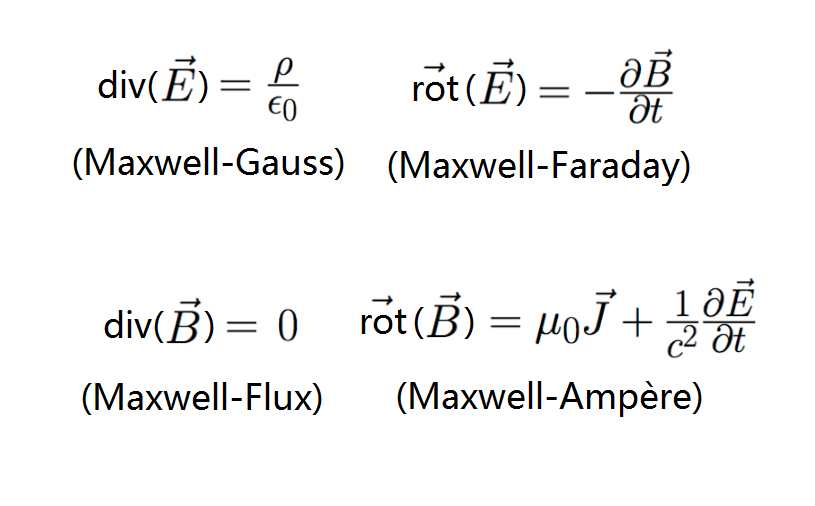
His crucial addition was the displacement-current term: a changing electric field can create a magnetic field even where no conduction current crosses the surface. This completed the symmetry with Faraday's result that a changing magnetic field creates an electric field.
02
THE FOUR IDEAS

What each equation says physically.

Gauss's law for electricity says electric charge is a source or sink of electric field. Gauss's law for magnetism says magnetic field lines form continuous loops—no isolated magnetic monopoles have been observed. Faraday's law says changing magnetic flux creates a circulating electric field. The Ampère–Maxwell law says current and changing electric flux create a circulating magnetic field.

  • Electric charge → electric-field divergence.
  • No magnetic monopoles → zero magnetic-field divergence.
  • Changing magnetic flux → induced electric field.
  • Current or changing electric flux → magnetic field.
03
THE PREDICTION

An oscillation can travel through space.

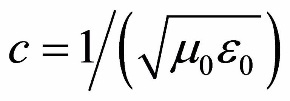
An oscillating charge creates changing electric and magnetic fields. Each changing field can regenerate the other, allowing a wave to propagate away from its source. Maxwell calculated its speed from the electric permittivity and magnetic permeability of free space.

The calculated value matched the known speed of light. Maxwell therefore concluded that light is an electromagnetic wave. Hertz later generated and detected longer-wavelength waves in the laboratory, turning the theoretical prediction into visible evidence.

FORMULAE & SI UNITS

Every symbol, defined.

Read the equation together with the physical meaning and SI unit of each parameter.

1 · Gauss's law for electricity

Electric charge is the source or sink of the electric field.

SymbolPhysical meaningSI unit
∇ ·Divergence operator: spatial spreading of a fieldper metre (m⁻¹) as a differential operator
EElectric fieldvolt per metre (V/m)
ρVolume electric-charge densitycoulomb per cubic metre (C/m³)
ε₀Vacuum electric permittivityfarad per metre (F/m)
2 · Gauss's law for magnetism

Magnetic field lines form closed loops; no isolated magnetic monopole has been observed.

SymbolPhysical meaningSI unit
∇ ·Divergence operatorper metre (m⁻¹) as a differential operator
BMagnetic flux densitytesla (T)
0No net magnetic source or sinkdimensionless zero
3 · Faraday's law in differential form

A changing magnetic field creates a circulating electric field; the minus sign expresses Lenz's law.

SymbolPhysical meaningSI unit
∇ ×Curl operator: local circulation of a fieldper metre (m⁻¹) as a differential operator
EElectric fieldvolt per metre (V/m)
BMagnetic flux densitytesla (T)
tTimesecond (s)
4 · Ampère–Maxwell law

Magnetic fields are created by conduction-current density J and by a changing electric field.

SymbolPhysical meaningSI unit
∇ ×Curl operatorper metre (m⁻¹) as a differential operator
BMagnetic flux densitytesla (T)
μ₀Vacuum magnetic permeabilityhenry per metre (H/m)
JElectric current densityampere per square metre (A/m²)
ε₀Vacuum electric permittivityfarad per metre (F/m)
EElectric fieldvolt per metre (V/m)
tTimesecond (s)
Electromagnetic-wave speed in vacuum

The value predicted from the electric and magnetic constants matches the measured speed of light.

SymbolPhysical meaningSI unit
cSpeed of light and electromagnetic waves in vacuummetre per second (m/s)
μ₀Vacuum magnetic permeabilityhenry per metre (H/m)
ε₀Vacuum electric permittivityfarad per metre (F/m)
THE IDEA TO REMEMBER

Maxwell's deepest result was not a decorative wave; it was a testable prediction that light and radio are the same kind of electromagnetic phenomenon.

01

SOURCES

Charge, current and changing fields
02

PREDICTION

Self-propagating EM waves
03

IDENTIFICATION

Light is an EM wave

COURSE SOURCE · “ELECTRONICS AND TECHNOLOGY” · ALI CHOURBA